


Company Introduction
Jiaxing Eatrin Vehicle Co., Ltd.
We Eatrin Vehicle is a manufacturer that belongs to Eatrin Group, which has a long history in manufacturer electric vehicles and spare parts. Such as electric scooter, electric motorcycle, electric bike, electric rickshaw and electric car. Especially in electric bicycle sharing system solution including software and hardware.
Why Choose US
One-stop Solution
With rich experience and one-to-one service,we can help you choose products and answer technical questions.
Customization Services
They provide customization services to meet specific customer requirements, ensuring that clients receive products that exactly fit their needs.
Innovation
We are dedicated to improving our systems continually, ensuring that the technology we offer is always cutting edge.
24h Online Service
We try and respond to all concerns within 24 hours and our teams are always at your disposal in case of any emergencies.

Motor Controller For E Vehicle
48V 60V electric motorcycle brushlessmotor controller for e vehicle. Prevention of thievery, cruise control, three shift three speed, reverse gear, one botton repair.

24V~72V electric bicycle /scooter DC Motor Controller brushless intelligentmotor controller for vehicle. Reduce the motor torque ripple to minimum; achieve vehicle noise-free,vibration-free and comfortable riding feeling.

Motor Controller For E Rickshaw
Electric Bike Motor Controller 60v 250w Brushless DCmotor controller for e rickshaw.The battery current limit function does not trigger battery current limit protection and prolongs battery life.

48V 800W Electric vehicle scooter Brushless DCmotor controller for rickshaw
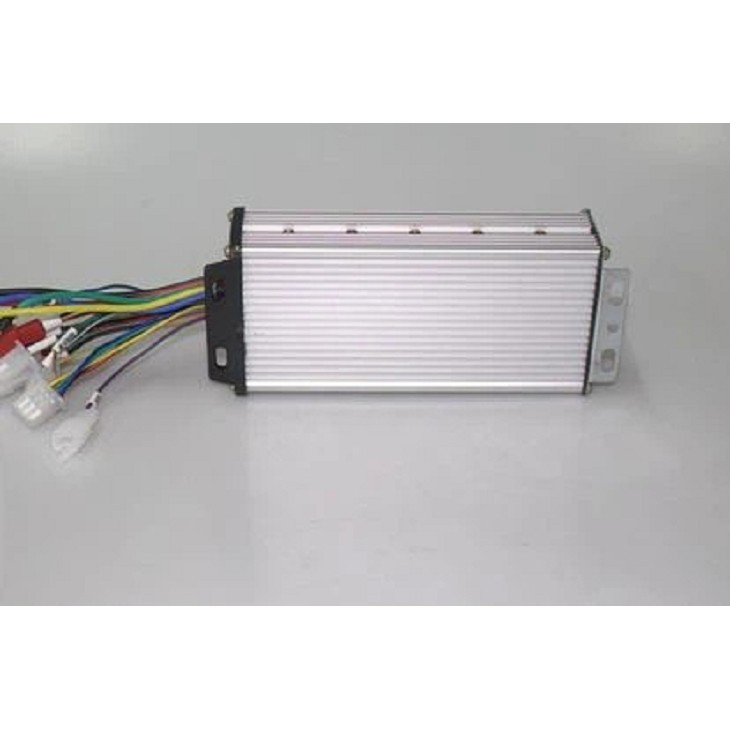
Motor Controller For E Tricycle
The best electric bike controller 60v 1000W motor controller for e tricycle dc motor controller.
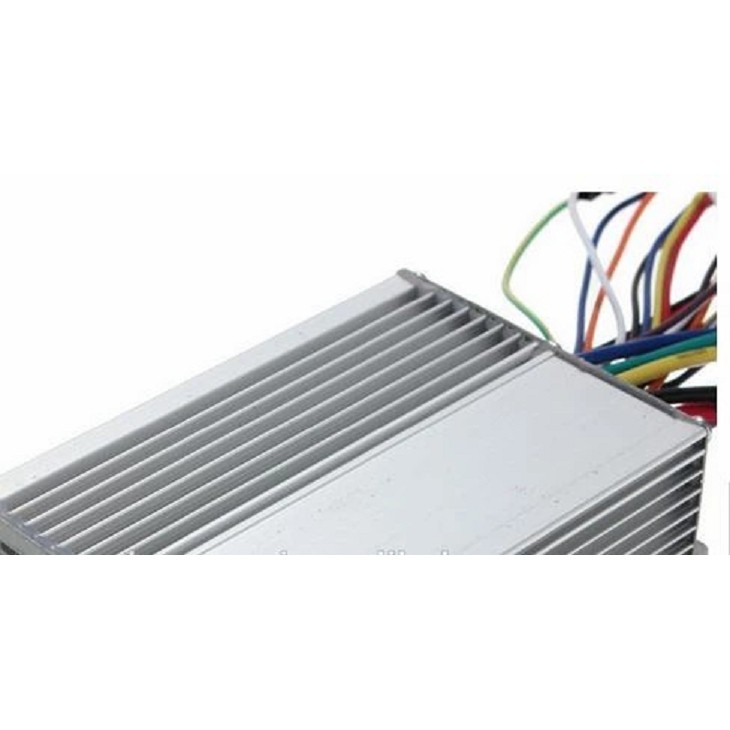
Brushless controller, motor controller for tricycle / E-bike / E-scooter / electric bicycle speed controller.

Motor Controller For E Scooter
Electric Scooter 48V 1000W Brushless motor controller for E scooter. Solve the phenomenon of speeding caused by poor speed control or line fault, and have the function of starting anti-flying to improve the safety of the system.
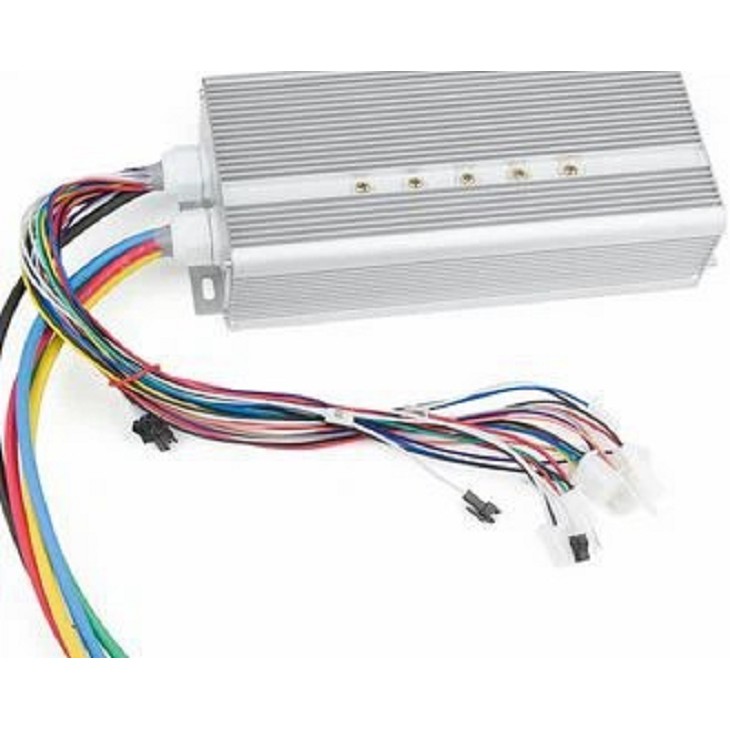
45v Motorcycle Brushless Bldc motor controller for scooter 24Mos. Low energy consumption in High-speed, with synchronous rectification PWM circuit

Ebike motorcycle scooter Hub Motor Controller 36MOS E Motor Controller. This e motor controller is double mold controller, both could work with sensor and without sensor
What is High Speed Bldc Motor
BLDC motors are very efficient for electric vehicle applications. The requirement of a permanent magnet in a BLDC motor is of concern as availability of the magnet is very uncertain. As a result, researchers are looking for use of other motors such as SRM. However, in case of SRM commutation and control is bit complex. However, the advantage is the same control architecture as explained for the BLDC motor can be adopted for any other motor used for electric vehicle application.
Advantages of High Speed Bldc Motor
Higher Efficiency
One of the more significant advantages of brushless DC motors is that they are between 85% and 90% more efficient than brushed motors which only have an 80% efficiency rate. For the most part, this high efficiency comes from the reduction of sound and heat, which in turn minimises loss of power.
Longer Lifespan
Brushless DC electric motors can easily last up to 10,000 running hours provided the application remains within the manufacturer's recommended guidelines for continuous operations. Since brushless DC motors have fewer moving parts, less components can wear out over time.
Low Maintenance
Unlike brushed DC motors, brushless motors don't have carbon brushes that need to be continuously replaced. This drastically reduces the maintenance requirements. Not only does this mean that BLDC motors face less downtime, but the maintenance costs are minimal.
High Torque-to-Weight Ratio
With fewer major components, brushless motors offer a stronger torque-to-weight and power-to-weight ratio than brushed motors. Less energy is wasted in friction between the commutator and brushes (as in the case of a brushed motor). When this happens it generates torque and much higher efficiency.
Precise Speed Control
In many applications, motor speed is crucial to the unit's success. Fortunately, BLCD motors offer concise speed control, and the user can easily control the rotational speed. The motor's brushless design ensures that the unit can alternate between low speeds and high speeds.
Brushless DC vs Induction
An induction motor's technology has been around for decades and is outdated for the next generation, while a BLDC motor uses high-tech to meet our everyday needs.
Let's discuss the difference between the BLDC motor and induction motor techniques.
- BLDC motor has different applications in DVD players, hybrid vehicles, refrigerators, CNC device tools, industrial robots, etc. An induction motor has applications in Lift Cranes, Crushers, Hoists, and exhaust fans (large capacity)
- BLDC motor is compact in magnitude as compared to a bigger induction motor.
- BLDC motor is cost-effective and energy-efficient as compared to an induction motor.
- Motors that use permanent magnets, like BLDC motors, are more expensive than those that are induction motors.
- The stator and rotor of the BLDC motor go hand-in-hand. An induction motor experience a gap as the rotor operates at a lower frequency than the stator. That creates a load on the motor.
- An induction motor does not require a controller in case of fixed speed, but a variable rate requires a controller. But a BLDC motor requires a controller at any rate.
- The drivers in the BLDC motor are brushless and can also work at integrated power factors, whereas the best power element for the AC drive is 85% approx.
Optimization of a Brushless DC Motor for High Speed Applications
|
Performance Indicators |
Slotted Design |
Slotless Design |
|
R/K2 |
|
New magnets and new winding technology |
|
RTh1 |
Better heat dissipation: coil-slator |
|
|
RTh2 |
Same |
Same |
|
Inertia |
Smaller air gap allowing smaller magnet diameter |
|
|
Iron Losses |
|
Smaller induction in lamination |
|
Resistance to Mechanical and Thermal Shocks |
The coil being inserted in the lamination |
|
|
Impact of new magnets on Design |
|
Stronger magnets meaning larger air gap |
The Impact of High-Speed BLDC Motor Controllers on Electric Vehicle Efficiency
As the automotive industry transitions towards electric mobility, the efficiency of electric vehicles (EVs) becomes a critical factor.


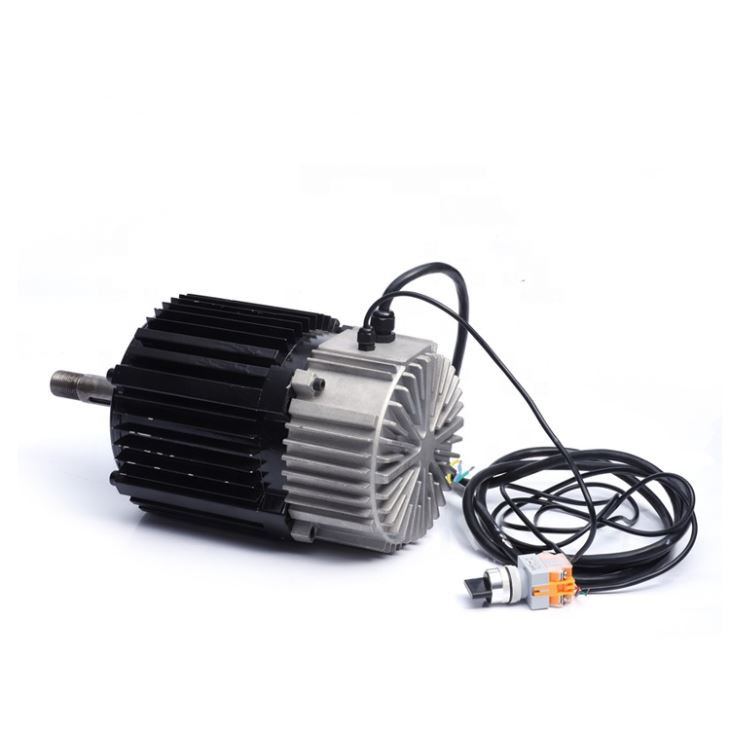
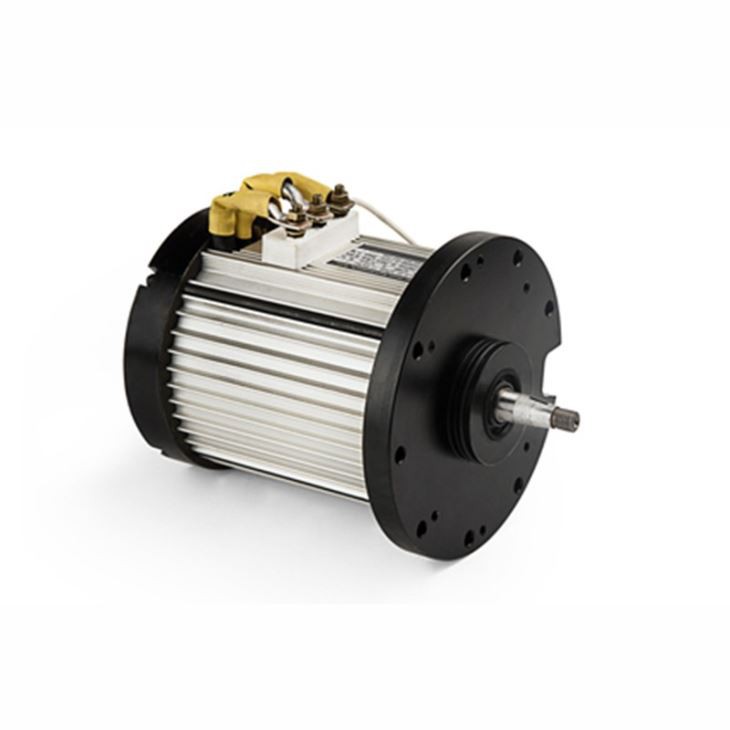
Efficiency and Range Optimization
One of the key benefits of high-speed BLDC motor controllers is their ability to optimize energy usage. Through precise control of the motor's rotation, these controllers minimize energy losses, resulting in increased overall efficiency. This efficiency directly translates into a more extended range for electric vehicles, addressing one of the primary concerns of EV adoption.
Regenerative Braking and Energy Recovery
High-speed BLDC motor controllers enable advanced features such as regenerative braking. During deceleration, the motor operates as a generator, converting kinetic energy back into electrical energy. This recovered energy is then fed back into the vehicle's battery, further enhancing the overall efficiency and contributing to sustainable driving practices.
Future Trends in Efficiency Enhancement
Continuous research and development in the field of high-speed BLDC motor controllers are driving further efficiency gains. Future trends include the integration of artificial intelligence for real-time optimization, advancements in materials for reduced weight, and the exploration of alternative cooling methods to improve thermal management. These innovations are poised to make electric vehicles even more energy-efficient and environmentally friendly.
What Determines the Speed of a Brushless DC Motor
The fundamental way to control the speed of actually any motor is to control the voltage applied to it.
That can be done by varying the DC voltage, or using pulse width modulation techniques, to control the average voltage.
This would be considered open-loop, because if the Load were to change that would change the speed of the motor. If you put a sensor on the motor to sense its speed, then you could feed that back to the voltage control or the pulse width modulation control and keep a constant speed as the load varied.
The motor the motor speed in the old small battery-powered cassette tape recorders was a motor it was controlled simply by keeping a constant voltage on it and a very light load.
The frequency of the voltage applied to the motor decides the speed.
BLDC is an AC motor. Some people think that it is a DC motor.
For Example, the waveforms applied to the BLDC motor looks like this,
It is any one of the three, However all the three are AC.
Hence,the frequency of the voltage applied to the motor decides the speed.
It can be calculated from the No. of poles.
By the formula Ns=120 f/ P
Where f is the frequency
P is the no. of poles.
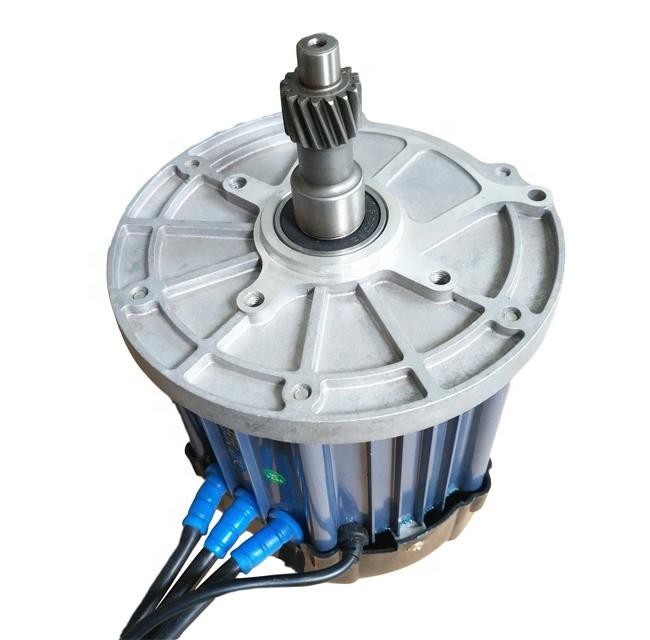
Construction of Brushless DC Motor
Permanent magnets are attached to the rotor of this motor. The stator houses the current-carrying conductors or armature windings. Electrical commutation is used to transform electrical energy into mechanical energy.
The fundamental design difference between brushed and brushless motors is the substitution of an electric switch circuit for a mechanical commutator. A BLDC motor is a form of synchronous motor because the magnetic fields created by the stator and rotor revolve at the same frequency.
A brushless motor has no current-carrying commutators. A brushless motor's field is switched via an amplifier that is activated by a commutating device such as an optical encoder.
The layout of BLDC motor controllers might differ depending on whether it is "Outrunner" or "Inrunner."
Outrunner - The field magnet is a rotating drum rotor that revolves around the stator. This type is suited for applications that require strong torque but do not require high rpm.
Inrunner- The stator is a stationary drum in which the field magnet revolves. This motor is noted for providing less torque than outrunner motors, but it can spin at extremely high rpm.
Working Principles of BLDC Motors and Controllers
A BLDC motor controller controls the motor's speed and torque, as well as starting, stopping, and reversing its revolution. Let us begin with the fabrication of a brushless motor to better comprehend the controller's operation. Its main components are as follows:
An armature or rotor made of permanent and, in many cases, neodymium magnets;
A stator has windings that, when powered, create a magnetic field.
The rotation of the motor is provided by the magnets on the rotor and the windings on the stator. They attract each other by having opposite poles and repel each other by having the same poles. A brushed DC motor goes through a similar process. The primary distinction is in the mechanism used to switch the current provided to the wire windings.
This is a mechanical operation in a BDC motor that is initiated by a commutator with brushes. It occurs electronically in a BLDC motor through transistor switches.
A BLDC motor controller senses the position of the rotor using sensors (such as a Hall-effect sensor) or without sensors. The sensors measure and transmit the rotor's position. The controller receives the data and instructs the transistors to switch the current and energize the relevant stator winding at the appropriate time.

How to Choose Brushless DC Motor Driver
First you need to choose a suitable brushless motor
Select a brushless motor based on electrical parameters. First of all, it is necessary to clarify the electrical parameters such as the required motor's speed range, torque, rated voltage, and rated torque, and select the appropriate brushless motor based on these parameters. Generally, the rated speed of brushless motor is 3000RPM, and the working speed is recommended to be above 200RPM. If you need to run at a lower speed for a long time, you can consider using a gearbox to reduce the speed and increase the torque.
Select a brushless motor according to the mechanical size. Select the appropriate motor according to the motor installation dimensions, output shaft dimensions, overall dimensions, etc. that are suitable for the equipment. We support customizing brushless motors in various sizes according to customer requirements.
Select the appropriate brushless driver
Select the appropriate driver according to the electrical parameters of the brushless motor. When selecting a driver, ensure that the rated power and voltage of the brushless motor are within the allowable range of the driver to ensure compatibility between the motor and the driver. Our existing brushless drivers can be divided into low-voltage drivers (12 - 60VDC) and high-voltage drivers (110/220VAC), which are suitable for low-voltage brushless motors and high-voltage brushless motors respectively. It should be noted that the two cannot be mixed.
When selecting a brushless driver, the installation size and heat dissipation conditions of the driver need to be considered to ensure that the driver works in a suitable environment
Factors to Consider When Choosing the Motor Type of an E-Scooter
Do you require an electric scooter for everyday commuting needs? If so, you should not choose a model with less than 300 watts of power. This is because you will not be able to travel on steep hills.
Besides that, low power also means that your scooter will not operate well on rough terrains. Another thing you should consider is your weight when choosing the motor type. You should get a scooter with a high power rating if you are a plus-sized individual.
Typically, a high power rating ensures that the scooter will need a bigger battery. This contributes to the vehicle's weight and increases its maximum holding capacity.
Matching Power Requirements: Choosing the right power rating is like finding the perfect shoe size - it ensures a snug fit for your electric vehicle. Too much power, and you risk overheating; too little, and your EV may feel sluggish.
Voltage Compatibility: It's like the right plug for your gadget; you need a motor controller that speaks the same voltage language as your EV's battery pack.
Energy Recovery: Regenerative braking is the EV's secret superpower. It's like having a magical wallet that refunds some of the money you spend. The motor controller's role here is to convert braking energy into usable electricity, giving your EV more miles per charge.
Controller Support: Not all motor controllers are created equal when it comes to regenerative braking. Some are like savvy financial advisors, while others are just passively watching your savings dwindle.
CAN Bus and Beyond: Communication protocols are the diplomats of the EV world, ensuring that all components work harmoniously. The motor controller should be fluent in the language of your EV's control system, often spoken via the CAN bus.
Integration: An ideal motor controller should be a team player, seamlessly integrating with your EV's control system, sharing vital information, and making sure your ride is smooth and safe.
How Does Motor Affect Other Electric Scooter Components
Motors with high power will increase the battery size of your scooter. This means that the model will be heavier than those with low power. Besides that, bigger batteries also mean that the scooter will take more time to charge.
Besides that, you should ensure that the motor type and controller type are the same. For instance, a sensorless BLDC motor will only operate in a device with a sensorless BLDC controller.
Applications of EV Motor Controllers
Electric Cars - The Mainstay in EVs: In the world of electric cars, motor controllers are like the conductors of an orchestra. They dictate the tempo, ensuring your EV accelerates smoothly, cruises efficiently, and regenerates energy during braking.
Electric Bicycles (E-bikes) - Boosting Pedal Power: E-bikes are the rebels of the bicycle world, with motor controllers turning ordinary bikes into electrifying rides. They provide that extra oomph when you need it most, making uphill climbs feel like a gentle breeze.
Electric Scooters - Urban Mobility: Picture zipping through city streets silently and efficiently. That's the magic of electric scooters, where motor controllers ensure you have a comfortable and responsive ride, perfect for navigating congested urban areas.
Electric Boats and Personal Watercraft - Sailing into the Future: On the water, motor controllers are the captains of electric boats and personal watercraft. They provide the thrust and control needed for silent and eco-friendly boating, offering serene journeys across lakes and oceans.
FAQ
Hot Tags: high speed bldc motor, China, manufacturers, suppliers, factory, wholesale, Outdoor Foldable Electric Scooter, 3000w electric citycoco scooter, 3000W Adult Electric Motorcycle, Lithium Battery Electric Citycoco Scooter, Scooter Controller 24v, Scooter Ebike Controller